Every 'Powered By' Ad Is a Confession: Decoding the Sponsors Behind Your Favorite Streams
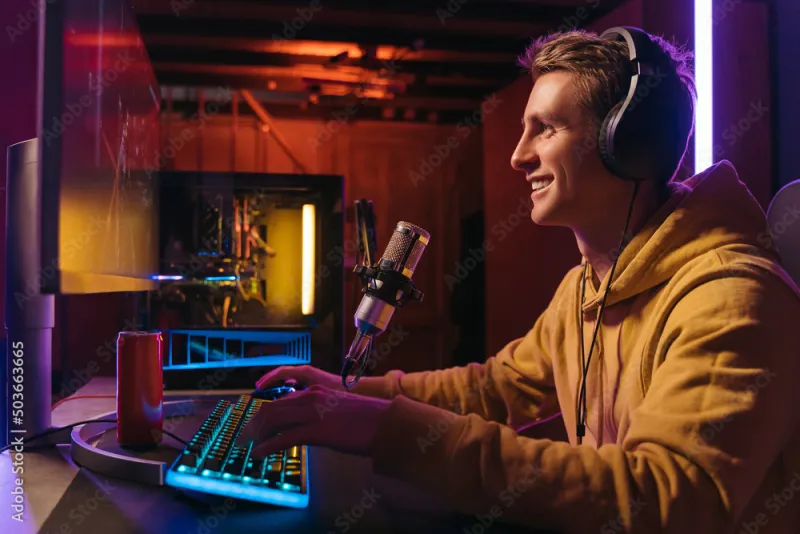
Photo: live streamer desk setup energy drink can sponsor microphone, via as1.ftcdn.net
You've heard the read a hundred times. The streamer finishes a clutch play, takes a sip of something neon, and launches into the same speech you could recite in your sleep: "Guys, if you're not using a VPN, you're playing with fire..."
Nobody thinks the VPN company is worried about your cybersecurity. So what's actually going on behind every "powered by" moment? Let's crack it open.
The Real Math Behind the Read
Sponsorships on live streams fall into a few rough tiers, and the money tells you a lot about the pitch.
Tier one: flat fees. Mid-to-large streamers typically get paid a fixed rate per stream or per month to do a 60-to-90 second read. Think thousands of dollars for something that takes two minutes of a six-hour broadcast. That's the whole reason you hear the same ad five streams in a row — the sponsor is buying repetition, not conviction.
Tier two: affiliate codes. "Use code KRA for 20% off." The creator gets a cut of every sale, usually 10-30%. This is why streamers suddenly get energetic about the product at the end of the month — the code is a scoreboard, and some sponsors track conversion in real time.
Tier three: the retainer plus performance combo. Big sponsors like gaming chair brands and hardware companies often blend both. It's the deal everyone wants, and it's why your favorite creator suddenly has opinions about chair ergonomics they never mentioned before.
None of this is a scandal. It's advertising. But it does mean that when a streamer says "I genuinely love this product," what they mean is "I genuinely love this invoice."
The VPN Problem
VPNs are the poster child of stream sponsorships, and they're worth a closer look because the pitch is often softer than the reality.
The standard read implies that without a VPN, you're exposed to hackers on public Wi-Fi and snooping ISPs. There's a kernel of truth in there — but for the average viewer watching at home on their couch, the actual security benefit is marginal. The bigger real-world uses are things like avoiding region-locked pricing or, let's be honest, accessing streaming catalogs from other countries, which sponsors would rather not say out loud.
If a streamer you trust is reading VPN copy that claims you're "one hacker away from disaster," that's not expertise — it's a script. Doesn't make them a villain. Makes them a person with a mortgage who was handed talking points.
Energy Drinks and the Science of Vibes
The energy drink sponsorships are more honest, in a way. Nobody's pretending the drink cures anything. The deal is simple: put the can on your desk, drink it on camera, and the brand gets constant visual presence during a four-hour broadcast.
The thing to watch here is the health angle. When a creator pivots from "tastes great" to "this is why I have energy all stream," that's where the script starts doing work. These drinks are caffeine delivery systems, and the sponsorship money is essentially paying for your favorite personality to normalize drinking them daily. Some do genuinely enjoy them. Some are drinking them because the contract says the can must be visible. You'll never know which, and that's the point.
The Gambling Sites: Where the Line Actually Is
Now we get to the category where "reading between the lines" stops being fun and starts being necessary.
Sponsored casino and betting sites have become notorious in streaming, and for good reason. Some of these operations are offshore, lightly regulated, or outright predatory. The worst ones offer creators deals structured so the streamer profits when viewers lose money — a revenue share on losses. That's not sponsorship. That's a commission on someone's bad night.
A few red flags worth memorizing:
- Bonus-heavy pitches. "Deposit $50, get $200 to play!" — generous bonuses usually mean the site makes withdrawing your money deliberately painful.
- No US licensing disclosure. Legitimate betting operations in the US are state-regulated. If the sponsor's site is licensed in Curaçao or "gaming jurisdiction TBD," that tells you everything.
- Streamers who won't show their own deposits. If someone promotes a gambling site but gets cagey about playing it themselves with real money, the deal is the product, not the casino.
- "It's just entertainment" framing paired with loss-based payouts. The framing is for you. The payout structure is for them.
Plenty of streamers have publicly turned down gambling money specifically because of how these deals are structured. When you see a creator quietly skip that category of sponsor while taking VPN and energy drink money, that's usually a values call, not a capacity issue.
How to Tell Belief From Paycheck
So is every sponsored read a lie? No. But there are tells that separate creators who choose their partners from creators who take whatever lands in the inbox.
They've used it before the deal. If a streamer has mentioned a product organically months before the sponsorship, that's a decent sign the brand came to them because the love was already there.
They'll say what it doesn't do. Honest sponsored segments include limitations. "This VPN is great, but it'll tank your ping in ranked" is a streamer who's actually used the thing. "This VPN makes you invincible" is a script.
They keep the same sponsors for years. Churn is a tell. A creator cycling through a different energy drink every quarter is shopping their audience. A creator who's had the same peripheral sponsor for three years probably negotiated that relationship.
They disclose cleanly. FTC rules require disclosure of paid promotions, and the good ones don't bury it. A quick "this is sponsored" up front is respect. A whispered "ad" mid-sentence at 2 AM is a workaround.
You're the Product Being Packaged
Here's the part nobody says out loud in the read: the sponsor isn't really buying the streamer. They're buying you — your trust, your parasocial goodwill, your willingness to click a code because someone you've watched for 400 hours told you to.
That doesn't mean you should resent it. Streaming is a job, sponsors pay the bills, and ads have funded entertainment since radio. But going in with open eyes changes how you hear the pitch. The VPN isn't going to save you. The drink is just caffeine. The casino wants your rent money.
The streamer knows all of this too. The best ones read the script with a wink, and honestly, that's the version you should trust the most — the one who knows you know, and does the read anyway, because everyone's in on it.
Stay sharp, chat. The code is always a code for something.