Be Careful What You Clip For: When 40,000 Strangers Show Up to Your Living Room
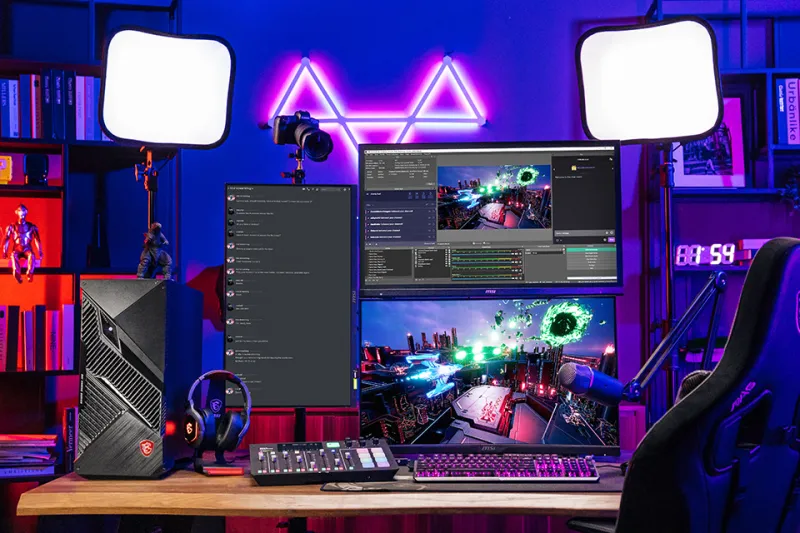
Photo: lonely streamer at desk with glowing setup looking at multiple monitors at night, via storage-asset.msi.com
Every streamer has the fantasy. You wake up, check your dashboard, and the number just keeps climbing. A clip hit the algorithm right. Someone with 8 million followers quoted your take. Suddenly you're not streaming to 11 people and a bot named xX_Nightbot_Xx — you're streaming to thousands.
Here's what nobody puts in the highlight reel: for a lot of streamers, that moment was closer to a home invasion than a jackpot.
The Party Where Nobody Knows the Host
Ask any long-time streamer what made their channel work and they'll say the same thing: the regulars. The handful of usernames that show up every night, know the inside jokes, pick up the thread of a conversation from three days ago. That's the product. Not the gameplay — the room.
Now drop 40,000 strangers into that room in 48 hours.
"It was like my apartment party got posted on a public Facebook group," one mid-sized variety streamer told us. "People I'd never seen before were spamming emotes, talking over each other, demanding I react to the clip that brought them there. The five people who'd been with me for two years just... went quiet. Then they stopped coming back."
That's the paradox. The viral moment delivers audience — but it delivers the wrong audience, or at least an unformed one, and it can drown the community that took years to build. Chat slows down because the regulars can't keep up with scroll speed. The inside jokes don't land. And the streamer, suddenly performing for a crowd instead of hanging with friends, starts reading like a different person on camera.
Gatekeeping Gets a Bad Rap (Sometimes)
The immediate instinct after a blow-up is to crack down. Slow mode to 30 seconds. Follower-only chat. Emote walls. Sub mode on the weekends. And sure, some of that is necessary triage — you cannot run an open chat with 20,000 people in it, that's not community, that's a stadium.
But there's a fine line between managing growth and building a moat. We've all seen the veteran viewer who treats every newcomer like a tourist at a locals-only beach. "This isn't how we did it in 2021." Cool, nobody cares, Kevin.
The streamers who survived the wave told us the same thing: you can't gatekeep your way to a healthy chat. You have to re-seed it. That means actively pulling the good newcomers aside — giving them roles, shouting them out, making them feel like insiders fast. It means the mods stop being janitors and start being hosts.
The Regulars Don't Owe You Anything
Here's the uncomfortable part. The old crew that drifted away? A lot of streamers quietly resent them for it. You built this thing together, and the second it got crowded, they bailed?
But flip it around. If your favorite bar suddenly had a two-hour line and a cover charge and you couldn't hear your friends talk, you'd find a new bar too. Loyal viewers aren't employees. They showed up for a specific experience, and overnight that experience stopped existing. Some of them will come back when the dust settles and a new normal forms. Some won't. Grieving that is part of the deal.
One streamer we spoke with put it bluntly: "I spent so long chasing the big number that I forgot the big number isn't a person. My old chat was a person. Forty thousand view count is just weather."
Surviving Success: What Actually Worked
The playbook that emerged from our conversations was surprisingly consistent:
- Split the difference with scheduling. Several streamers added a separate "community night" — lower production, chill vibes, explicitly for the old guard — while letting the main stream absorb the new crowd.
- Promote from within, fast. The mods who survived the influx were mostly people who'd been viewers for three months, not three years. Fresh blood moderating fresh blood.
- Say the quiet part out loud. The single most effective move we heard: just acknowledging the shift on stream. "I know chat feels different lately. Give the new folks a minute to learn the house rules." Regulars respond to being seen.
- Stop refreshing the analytics. Every streamer who described the experience as traumatic also described obsessive dashboard-checking. The number becomes a scoreboard, and the scoreboard becomes the job.
The Comeback Nobody Clips
The streamers who came out the other side mostly aren't bigger than they were at peak virality. Some are smaller. All of them are fine with that — because the room feels like a room again.
That's the real lesson hiding under the viral fantasy. Growth is not the win condition. A chat you actually want to open at 9 PM on a Tuesday is. The algorithm can hand you an audience, sure. But a community? That one you still have to build the old way — one regular at a time, and it turns out they were the whole point from the start.